Jul 10, 2009

ECUSA Presiding Bishop to Martin Luther: "You were wrong." To Billy Graham: "You're a dangerous heretic!"

I left the Episcopal Church a long time ago. Here's why.


Episcopal presiding bishop terms individualistic salvation 'heresy'

By Bob Allen
Thursday, July 09, 2009

ANAHEIM, Calif. (ABP) -- The presiding bishop of the Episcopal Church called the evangelical notion that individuals can be right with God a "great Western heresy" that is behind many problems facing the church and the wider society.

Describing a United States church in crisis, Presiding Bishop Katharine Jefferts Schori told delegates to the group's triennial meeting July 8 in Anaheim, Calif., that the overarching connection to problems facing Episcopalians has to do with "the great Western heresy -- that we can be saved as individuals, that any of us alone can be in right relationship with God."

"It's caricatured in some quarters by insisting that salvation depends on reciting a specific verbal formula about Jesus," Jefferts Schori, the first woman to be elected as a primate in the worldwide Anglican Communion three years ago, said. "That individualist focus is a form of idolatry, for it puts me and my words in the place that only God can occupy, at the center of existence, as the ground of being."

Presiding Bishop Katharine Jefferts Schori blames individualistic views of salvation for ills plaguing the church in the United States.

Jefferts Schori said countering individualistic faith was one reason the theme chosen for the meeting was "Ubuntu," an African word that describes humaneness, caring, sharing and being in harmony with all of creation.

"Ubuntu doesn't have any 'I's in it," she said. "The 'I' only emerges as we connect -- and that is really what the word means: I am because we are, and I can only become a whole person in relationship with others. There is no 'I' without 'you,' and in our context, you and I are known only as we reflect the image of the One who created us."

Jefferts Schori said "heretical and individualistic understanding" contributes to problems like neglect for the environment and the current worldwide economic recession.

"The sins of a few have wreaked havoc with the lives of many, as greed and dishonesty have destroyed livelihoods, educational possibilities, care for the aged, and multiple forms of creativity," she said. "And that's just the aftermath of Ponzi schemes for which a handful will go to jail."

She said in order to be faithful, "we need to be continually rediscovering that my needs are not the only significant ones."

"Ubuntu implies that selfishness and self-centeredness cannot long survive," she said. "We are our siblings' knowers and their keepers, and we cannot be known without them."

"We have no meaning, no true existence in isolation," she said. "We shall indeed die as we forget or ignore that reality."

About 200 Episcopal bishops and 850 clergy and lay deputies were expected to convene for the 10-day meeting. Business items are set to include debates over human sexuality, politics and poverty.

One resolution being considered calls for "generous discretion" to be extended to clergy in exercising pastoral ministry in six states -- Connecticut, Iowa, Maine, Massachusetts, New Hampshire and Vermont -- where the civil marriage of same-gender couples has been legalized as well as other states that may follow suit in the next three years.

The 2.1-million-member denomination has argued vociferously about homosexuality since 2003, when the group approved the election of its first openly gay bishop, Gene Robinson of New Hampshire. Many more conservative Episcopalians and a handful of congregations have begun breaking away from the church in the years since.

Southern Baptist mega-church pastor Rick Warren, author of The Purpose Driven Life, took sides in his sister denomination's debate recently by showing up in Texas to encourage about 800 Episcopalians attending the first annual meeting of a conservative breakaway group calling itself the Anglican Church in North America.

Warren, who spoke out last fall against legal gay marriage in California, said in January that any nearby Anglican congregation that loses its property after breaking with the U.S. Episcopal Church was welcome to meet on the campus of his Saddleback Church.

-30-

Bob AllenThis e-mail address is being protected from spam bots, you need JavaScript enabled to view it is senior writer for Associated Baptist Press.


Katharine Jefferts Schori not only refutes the whole of the Protestant Reformation and the martyrdom at the stake of Archbishop Thomas Cranmer and Bishops Hugh Latimer and Nicholas Ridley. Worse, she she refutes the words of Jesus himself.

Jesus' first words in his ministry were "Repent, for the kingdom of heaven is near" (Matthew 4:17). John 3:16 drives home the point about believing (an active term, not a passive one). The very "sinner's prayer" that Jefferts Schori calls heretical is a combination of Jesus' own words and instructions, drawn from Romans 10:9-10, Luke 18:13-14, and Matthew 7:7.

Perhaps if she were to go into her private chapel, kneel before God, and pray this, she might yet be saved. Other bishops of the church have done just that... after their consecrations.

Heavenly Father, I know that I have sinned against you and that my sins separate me from you. I am truly sorry. I now want to turn away from my past sinful life and turn to you for forgiveness. Please forgive me, and help me avoid sinning again. I believe that your son, Jesus Christ, died for my sins, was resurrected from the dead, is alive, and hears my prayer. I invite Jesus to become the Lord of my life, to rule and reign in my heart from this day forward. Please send your Holy Spirit to help me obey You, and to do Your will for the rest of my life. In Jesus' name I pray, Amen

Jun 28, 2009

W.W.J.P.? (What would Jesus pack?)


"Welcome to New Bethel Assembly of God. Keep those hands in the air. Hallelujah!"
A pastor in the US state of Kentucky told his flock to bring handguns to church in what he said was an effort to promote safe gun ownership.

Pastor Ken Pagano told parishioners to bring their unloaded guns to New Bethel Church in Louisville for a service celebrating the right to bear arms.

He said he acted after church members voiced fears the Obama administration could tighten gun control laws.

When the service began, some 200 people were present, AP news agency said.

"We are wanting to send a message that there are legal, civil, intelligent and law-abiding citizens who also own guns," Mr Pagano told the congregation.

"If it were not for a deep-seated belief in the right to bear arms, this country would not be here today," he said.

The pastor also held a handgun raffle, as well as providing information on gun safety.

"I wish more churches did this, I wish more people did this," the Louisville Courier-Journal quoted one attendee, Doreen Rogers, as saying.

"For some reason, most people think that carrying guns is sinful. It's not. I think my life is worth protecting."

About 10 members of a private local militia also attended, the Courier-Journal said.

A coalition of religious groups and campaigners held a rival gun-free event at the same time on the other side of Louisville.

"The idea of wearing guns to churches or any sacred space I think many people find deeply troubling," organiser Terry Taylor told AP.

In the US, the right to bear arms is enshrined in the Second Amendment of the US Constitution. There are thought to be more than 200 million firearms in private hands.

But some gun owners fear that the new administration in the White House could try to challenge or amend some gun ownership laws.

Critics of the laws, meanwhile, link high levels of gun crime with high levels of gun ownership.

Story from BBC NEWS:
http://news.bbc.co.uk/go/pr/fr/-/2/hi/americas/8122767.stm

Published: 2009/06/28 02:39:02 GMT

© BBC MMIX


Speaking as a gun owner and as a follower of Jesus Christ, this is just so wrong.

Jun 22, 2009

Baptismal Fun


We had a rare adult baptism at my church yesterday. Being of anabaptist tendencies in a catholic/Lutheran setting, I often cringe at parts of the ceremony. The traditional "moistening of the forehead" leaves me unconvinced in the efficacy of the ritual.

Better would be a dunking booth (gussied up for proper decorum).

The baptismal candidate, dressed in white robes, could take their place in the booth, and there profess their belief before man and God. The attending pastor could then throw (overhand) three softballs at the target, while invoking the three-in-one names of the Trinity.

"In the name of The Father!" (whoosh!)

"...and of the Son!" (whoosh!)

"...and of the Holy Spirit!" (SPLASH!)

Jun 12, 2009

This beer is the pits...


BBQ pits, that is.

Shiner has a new beer. It's a Helles Rauchbier, (if that's possible, and I guess it is). Shiner Smokehaus.

The malt has been mesquite BBQ'd!

Really does taste and smell like I'm drinking a nice malt lager while smokin' up a slab'o ribs.

"The Perfect Sommer Bier" it says on the neck. This Sommer likes it. ;-)

Jun 9, 2009

Les Paul is 94 today.


...and he still plays at the Iridium Club on Times Square every Monday night (two sets).

Jun 8, 2009

Help me get this out of my head!


HOMAGE TO MARAT - a song from a play: The Persecution and Assassination of Jean-Paul Marat as Performed by the Inmates of the Asylum at Charendon Under the Direction of the Marquis de Sade

Four years after the revolution and the old king's execution
Four years after, remember how, those courtiers took their final vow

"String up every aristocrat!
Out with the priests, let them live on their fat!"

Four years after we started fighting,
Marat keeps on with his writing.
Four years after the Bastille fell,
He still recalls the old battle yell

"Down with all of the ruling class!
Throw all the generals out on their arse!"

Good old Marat by your side we'll stand or fall
You're the only one that we can trust at all

Four years he fought and he fought unafraid,
Sniffing down traitors by traitors betrayed,
Marat in the courtroom, Marat underground,
Sometimes the otter and sometimes the hound,
Fighting all the gentry and fighting every priest,
Businessman the bourgeois the military beast,
Marat always ready to stifle every scheme,
of the sons of the arse licking dying regime
We've got new generals, our leaders are new,
They sit and they argue and all that they do
Is sell their own colleagues and ride upon their backs
And jail them and break them and give them all the axe
Screaming in language that no one understands
Of the rights that we grabbed with our own bleeding hands
When we wiped out the bosses and stormed through the wall
Of the prison they told us would outlast us all!

Marat we're poor,
And the poor stay poor.
Marat don't make
Us wait anymore.
We want our rights and we don't care how,
We want our revolution now.

Why do they have the gold?
Why do they have the power?
Why why why?
Do they have the friends at the top?
Why do they have the jobs at the top?

We've got nothing,
Always had nothing,
Nothing but holes and millions of them.
Living in holes dying in holes,
Holes in our bellies and holes in our clothes!

Marat we're poor,
And the poor stay poor.
Marat don't make us wait anymore.
We want our rights, and we don't care how,
We want our revolution... now.

Jun 3, 2009

For truth.

"You cannot slander human nature; it is worse than words can paint it."

-- Charles Haddon Spurgeon

May 25, 2009

Khrist and the Kasuals.


In a wide-ranging discussion about the state of faith in America, veteran researcher George Barna recently addressed questions raised by his new book, The Seven Faith Tribes: Who They Are, What They Believe, and Why They Matter. In that book, Barna outlines seven diverse faith segments, profiling their lifestyles, religious beliefs and practices, values and life goals. The seven tribes include Casual Christians, Captive Christians, Mormons, Jews, Pantheists, Muslims and Skeptics.

More.

Happy Memorial Day.

May 24, 2009

Keep Out


The cause of [the cessation of the extraordinary gifts of the Holy Ghost] was not, ... "because there was no more occasion for them," because all the world was become Christians... The real cause was, "the love of many," almost of all Christians, so called, was "waxed cold." The Christians had no more of the Spirit of Christ, than the other heathens.

The Son of man, when he came to examine his church, could hardly "find faith upon earth." This was the real cause, why the extraordinary gifts of the Holy Ghost were no longer to be found in the Christian church; because the Christians were turned heathens again, and had only a dead form left.

--John Wesley (1703-1791), Sermons on Several Occasions,
New York: Carlton & Phillips, 1855, Sermon XCIV. "The
More Excellent Way", vol. 2, p. 266.

See the book.

May 21, 2009

St. Philip's ascends.


The Ascension of Jesus, Salvador Dali

Today is Ascension Day, the commemoration of the day Jesus returned to Heaven. His parting words to his disciples (including St. Philip the Evangelist) from Matthew 28:16-20:
(16) Then the eleven disciples went away into Galilee, into a mountain where Jesus had appointed them. (17) And when they saw him, they worshiped him: but some doubted. (18) And Jesus came and spoke unto them, saying, "All power is given unto me in heaven and in earth. (19) Go ye therefore, and teach all nations, baptizing them in the name of the Father, and of the Son, and of the Holy Ghost: (20) Teaching them to observe all things whatsoever I have commanded you: and, lo, I am with you always, even unto the end of the world."

So today is also "The Great Commission Day." Rather than mourn Jesus' leaving us, we celebrate his sending us out into the world to do his work, strengthened and accompanied by the Holy Spirit. And today is also a day that St. Philip the Joy Giver Episcopal Church ponders their future, now that they have been closed as a mission of the Episcopal Diocese of Texas.

But who was Philip the Joy Giver?

Philip, Deacon and Evangelist

Acts 8:26-40 --

Then an angel of the Lord said to Philip, "Get up and go toward the south to the road that goes down from Jerusalem to Gaza." (This is a wilderness road.) So he got up and went.

Now there was an Ethiopian eunuch, a court official of the Candace, queen of the Ethiopians, in charge of her entire treasury. He had come to Jerusalem to worship and was returning home; seated in his chariot, he was reading the prophet Isaiah.

Then the Spirit said to Philip, "Go over to this chariot and join it." So Philip ran up to it and heard him reading the prophet Isaiah. He asked, "Do you understand what you are reading?" He replied, "How can I, unless someone guides me?" And he invited Philip to get in and sit beside him. Now the passage of the scripture that he was reading was this:

"Like a sheep he was led to the slaughter,
and like a lamb silent before its shearer,
so he does not open his mouth.
In his humiliation justice was denied him.
Who can describe his generation?
For his life is taken way from the earth."

The eunuch asked Philip, "About whom, may I ask you, does the prophet say this, about himself or about someone else?" Then Philip began to speak, and starting with this scripture, he proclaimed to him the good news about Jesus.

As they were going along the road, they came to some water; and the eunuch said, "Look, here is water! What is to prevent me from being baptized?" He commanded the chariot to stop, and both of them, Philip an the eunuch, went down into the water, and Philip baptized him.

When they came up out of the water, the Spirit of the Lord snatched Philip away; the eunuch saw him no more, and went on his way rejoicing. But Philip found himself at Azotus, and as he was passing through the region he proclaimed the good news to all the towns until he came to Caesarea.


Immediately after witnessing to and baptizing the Ethiopian (although the baptism was conducted by the Holy Spirit, Philip simply poured the water), Philip was transported away by the Holy Spirit, and and went on his way loudly singing praises to God.

That is what I'd suggest the band of believers who make up the community known as St. Philip the Joy Giver do. Allow the Holy Spirit to transport them to a new place, where they can sing joyful songs of praise to our God, our resurrected Lord, and the Holy Spirit, Three In One, in thanksgiving for what he has done in their lives.

Go in peace to love and serve the Lord. Thanks be to God!

Holy God, no one is excluded from your love, and your truth transforms the minds of all who seek you: As your servant Philip was led to embrace the fullness of your salvation and to bring the stranger to Baptism, so give us all the grace to be heralds of the Gospel, proclaiming your love in Jesus Christ our Savior, who lives and reigns with you and the Holy Spirit, one God, now and for ever. Amen.

May 19, 2009

Leftovers Night at Casa del Verano


Brisket from Milt's in Kyle,

Lockhart sausage from Milt's,

Black beans from Tres Amigos in south Austin,

Irish soda bread from Trinity Hall in Dallas,


...all good!

May 18, 2009

That's all, Volks! Tipp o' the hat memories.


Quaintly crappy cell-phone pics by P.M. Summer.

The Tipperary Inn closed again last weekend. It closed once before, was bought and reopened, and failed again.

The Tipperary Inn (not to be confused with Fort Tipperary just east of White Rock Lake) was an Irish-style bar/pub, complete with actual pub furnishings imported from Ole Eire. Legend says the Tipperary's first owners (who were Irish) paid $1 million in cash for the furnishings. They were in the "sporting hardware export" business, so it was whispered, and could be found hanging around Knights of Columbus halls in the USA.

The triangularly-shaped stone building they were housed in was originally the Lakewood Volk's Department Store, an upper-middle class shopping venue that I grew up with. This particular location (designed by George Dahl?) had multiple levels, and a fascinating indoor/outdoor goldfish pond that went through a glass wall to the outside. There was even an item I can't believe REALLY existed as I (and others) remember it... an X-Ray machine to size a child's foot properly. The bi-level corner of the building the Tipp was located in was the Women's Fitted Wear section (as opposed to Ready-to-Wear), and the mezzanine was Couture.

So, I paid my respects to the Tipp last Thursday after work. I walked in at 4pm (opening). It was un-air conditioned at that time (cost savings?), and had the distantly all-too-familiar smell of stale beer and bleach that I remember from my bar-keep days during my college years. I sat at the bar and ordered my preferred lager, a Spaten Bock, thinking perhaps I was making a mistake (ordering a Bavarian lager during the parting visit to an Irish pub). As I was pondering my error, I heard the gush of CO2 coming from the tap, the tell-tale sound of a blown keg. "Make that a Guinness" I said to the Mohawk sporting barkeep in a First Cav t-shirt (IIRC).

I drank my beer, wishing I'd had the foresight to order a Guinness 250 instead. Then it happened. A bad idea. A potentially ruinous idea. What if I pulled together some investors, cashed out my retirement, took over the Tipp, contracted with Franconia Brewery to brew private-label beers, did some minor redecorating, and re-opened as the "Volks Brauhaus"?

Or even as "The White Horse Tavern," appealing to the historically literate renegades at nearby Dallas Theological Seminary.

May 12, 2009

OK Cupid

You are a

Social Moderate
(50% permissive)

and an...

Economic Liberal
(25% permissive)

You are best described as a:

Democrat


Link: The Politics Test on Ok Cupid
Also: The OkCupid Dating Persona Test

Today's unrepentant thievery


If New Testament Christianity is to reappear today with its power and joy and courage, men must recapture the basic conviction that this is a Visited Planet. It is not enough to express formal belief in the "Incarnation" or in the "Divinity of Christ"; the staggering truth must be accepted afresh--that in this vast, mysterious Universe, of which we are an almost infinitesimal part, the great Mystery, Whom we call God, has visited our planet in Person. It is from this conviction that there springs unconquerable certainty and unquenchable faith and hope. It is not enough to believe theoretically that Jesus was both God and Man; not enough to admire, respect, and even worship Him; it is not even enough to try to follow Him.
The reason for the insufficiency of these things is that the modern intelligent mind, which has had its horizons widened in dozens of different ways, has got to be shocked afresh by the audacious central Fact--that, as a sober matter of history, God became one of us.

... J. B. Phillips (1906-1982), New Testament Christianity
[1956], chapt. iii, par. 3

See the book at http://cqod.com/r/rs056

Apr 29, 2009

Plan 9 From Outer Space


When the City of Dallas developed its current Council adopted Bicycle Transportation Plan (working with the Department of Transportation and over 100 bicyclists from local cycling organizations), a “clean-slate” design approach was taken. All possible facility types were considered.

There are basically four bicycle facility designs: street separated Multi-Use Paths, on-street bike lanes, side paths/cycle-tracks (all examples of segregated facilities), and on-street bike routes (shared lane facility). Each has its preferred application scenario.


Multi-Use Paths/side paths/cycle-tracks

Currently, the City is in the process of completing 100 miles of paved, 12’ wide, off-street trails though parks, under power lines, and parallel to rail corridors. Because these facilities are constrained by location and available right-of-way, their use as a viable, city-wide transportation element is limited. But they can be a good enhancement to an on-street system.

Side paths (also called cycle tracks) have been discouraged by traffic engineers and responsible bicycle planners for some time, due to the dramatic increase in collisions between turning automobiles and straight through cyclists. The Netherlands (where such facilities are extremely popular) have documented up to an 180% increase in serious collisions on side paths compared to on-street cycling.


Bike Lanes

Bike Lanes are preferred by cyclists who fear sharing a roadway with automobile traffic and motorists who have a dislike of sharing the roadway with bicyclists.

From a traffic engineering perspective, a bike lane is classified as a “traffic control device”, whose job is to channel existing bicycles out of the way of motor vehicles. The popular notion is the opposite, that bike lanes are designed to attract cyclists, but that is not how they function or why they were designed. To install bike lanes that function, you need two pre-existent conditions: high volume of cyclists in a concentrated area (i.e., a large college campus and surrounding area), and sufficient road width to accommodate a 5’ lane.

Most urban thoroughfares and collectors in Dallas have 11’ wide vehicle travel lanes (a foot narrower than the current recommended minimum and three feet narrower than the Texas Department of Transportation preference). The recommended width for bike lanes is four feet, with a one foot edge stripe (five feet in total width from curb).

On a typical Dallas three-lane divided urban thoroughfare, the cross-section looks like this: 11’-11’-11’----11’-11’-11’. Attempting to install bike lanes on such a street without removing travel lanes would result in vehicle travel lanes that are only 9 feet wide (5’-9’-9’-9’----9’-9’-9’-5’), 25% narrower than current minimum recommendations, and too narrow to accommodate existing truck, bus and even SUV usage. This creates traffic conflicts that can lead not only to property damage, but can even endanger lives (especially the lives of cyclists as cars are “pushed” into the available space).

To install bike lanes of the recommended 5’ width (4’ for the bike lane, with a 1’ offset from the curb), the street cross-section now looks like this, 5’-14’-14’----14’-14’-5’, dropping a full lane of traffic in each direction. When you consider that people tend to ask for bike lanes on streets that are already overcrowded, you can see how the problems are exacerbated by the attempts at alleviation. Removing one lane of traffic from a 3-lane directional configuration does not decrease that street’s capacity by 33%, but by almost 50%, resulting in increased queuing at intersections and left turns, which means increased idling and greatly increased emissions of volatile organic compounds (VOCs).

There is also a problem with banning all on-street parking on streets with bike lanes and the resulting backlash from homeowners and businesses. While many cities stripe 3’ wide bike lanes next to on-street parking (like Austin, Texas), they have proven to be very dangerous, as cyclists are often hit by opening car doors.

Contrary to popular belief, there is an increased danger to cyclists in riding in bike lanes, caused by newly created conflicts with right-turning motor vehicles. This is an unavoidable complication of having a straight-through travel lane for bicyclists located to the right of right-turn allowed motor vehicles, a lane that lulls cyclists into thinking they are protected from right-turning vehicles. The vast majority of serious car-bike collisions occur in this type of conflict, as cyclists outside of motorists’ direct line of sight, slip into the motorists’ left-side blind zone.

The conflict that many cyclists believe a bike lane protects them from (being struck from the rear by an overtaking motor vehicle) is by far the rarest of serious car-bike collisions, but it is among the most dangerous (exceeded by wrong-way cyclists hitting oncoming vehicle). Interestingly, when you remove the rural road incidence of this type of collision (the most common area for fatality occurrence), the collision rate for cyclists in a bike lane, and without a bike lane, is statistically the same.


On-Street Bike Routes

Rather than install a few miles of bike lanes, what Dallas did was create a city-wide 400 mile (800 lane miles) signed bicycle route system on local, mostly low volume, streets that parallel thoroughfares. Where a thoroughfare (or bridge) is required, the City committed to build wide-outside-lanes to create extra room for cyclists and motor vehicles to share the road. On new road construction (and reconstruction when right of way is available), depending upon posted speeds, the roadway cross section will look like this: 14’-11’-11’----11’-11’-14’, or 15’-12’-12’----12’-12’-15’.

Instead of striping less than 20 lane-miles of bike lanes (.05% of the City's streets), the City (upon the recommendation of active cyclists) signed 800 lane-miles of bike routes (10% of the City's streets), resulting in a more comprehensive city-wide bike plan than a simple bike lane system. The vast majority of these cyclist-selected routes were on low-volume local streets that paralleled major thoroughfares, and were the ideal setting for cyclists.

The plan improved real conditions for cyclists without degrading conditions for the dominant motor traffic. This approach works best in a city like Dallas with a complex street grid system dating to the late 19th and early 20th centuries. Suburban cities (and the far edges of Dallas) have a more difficult task. It was understood that an education component was required, for both cyclists and motorists, but the City Council decided to not fund that element as a cost saving measure, as the City continued to downsize staff and eliminate “non-essential” services. Reduced forces also played a part in the City's decision to decline a $1,000,000 bicycle education program for adults and children.

Dallas is preparing to undertake a comprehensive update of its current Bike Plan, and the viability and application of bike lanes and cycle tracks will again be considered, with changes in the City’s approach being preordained.

Apr 27, 2009

Observant servant.

In the beginning the church was a fellowship of men and women centering on the living Christ.

Then the church moved to Greece, where it became a philosophy.

Then it moved to Rome, where it became an institution.

Next, it moved to Europe, where it became a culture.

And, finally, it moved to America, where it became an enterprise.


-- Richard Halverson, former Chaplain of the United States Senate

Apr 21, 2009

"Will you come to the bower I have shaded for you?"


The Battle of San Jacinto, fought on April 21, 1836, was the decisive battle of the Texas Revolution. Led by General Sam Houston, the Texas Army engaged and defeated General Antonio López de Santa Anna's Mexican forces in a fight that lasted just eighteen minutes.

As the Texian infantry advanced, a single fife and a single drum played the popular love song "Will You Come to the Bower?"

Will you come to the bower I have shaded for you?
Your bed shall be of roses, be spangled with dew.
Will you, will you, will you come to the bower?

There under the bower on soft roses you'll lie,
With a blush on your cheek, but a smile in your eye.
Will you, will you, will you smile my beloved?

But the roses we press shall not rival your lips,
nor the dew be so sweet as the kisses we'll sip.
Will you, will you, will you kiss me my beloved?


Hundreds of Mexican soldiers were killed, and hundreds more captured, while only nine Texians died.

Apr 20, 2009

Burning down the house.


"The Church exists by mission as fire exists by burning. Without mission there is really no Church."

-- Emil Brunner (1889-1966), The Word and the World, London: SCM Press, 1931, p. 11

Apr 19, 2009

Welcome to my church...


...and (probably) to yours.

The conception of the Church which we tend to reproduce as the fruit of our missionary work is so much a replica of our own, so much that of a fundamentally settled body existing for the sake of its own members rather than that of a body of strangers and pilgrims, the sign and instrument of a supernatural and universal salvation to be revealed, that our missionary advance tends to follow the lines of cultural and political expansion, and to falter when that advance stops.

... Lesslie Newbigin (1909-1998), The Household of God, New York: Friendship Press, 1954, p. 166

See the book at http://cqod.com/r/rs036

Apr 16, 2009

Dallas guitarist Rocky Hill dies at 62


Dallas/Houston guitarist Rocky Hill dies at 62
By ANDREW DANSBY
Copyright 2009 Houston Chronicle
April 13, 2009, 4:24PM


Rocky Hill was described as “a monster on guitar,” though over four decades he could be a difficult creature to find. His career dated back to the 1960s when he was a hotshot player with blue hair joined on bass by his brother Dusty in a psychedelic rock band. That a Google search on “Rocky Hill” turns out dozens of entries on a town in Connecticut and nearly nothing on the guitarist is testament to how good a musician can be without ever finding his rewards.

Hill died Friday at his Houston-area home; he was 62. A statement claimed he died of “undisclosed complications of a medical condition.”

Documentation of Hill’s career requires a hunt. One of the two albums he made with American Blues, a 13th Floor Elevators-inspired band he formed with Dusty in the late-’60s, can be found online for upwards of $70 while the other is unavailable. His three solo albums can be found online, but are unlikely to be stocked at your local record shop. Still Hill was a flashy slide player with a gritty, soulful voice who always stated he was more interested in playing than making money.

John Rockford Hill was born Dec. 1, 1946. He was 10 or 11 when younger brother Dusty received a guitar for Christmas. But Hill was the child drawn to the instrument. He started out playing Jimmy Reed songs; years later Reed would have a slide piece custom made for Hill.

By 15 Hill was playing clubs in Dallas with his band the Starliners. Dusty learned to play bass guitar and also sang. They phased through a series of band names before settling on American Blues, a trio featuring drummer Frank Beard. They dyed their hair blue and played psychedelic blues rock common to the era: The trippy echoed vocals on songs such as All I Saw Was You and Tim Hardin’s If I Were a Carpenter; the twinge of folky pomposity that wafted through Fugue for Lady Cheriff.

But their 1967 debut album also showed a clear affinity for the blues evident on Mercury Blues.

The band split in 1969 and all three members moved to Houston. Beard was recruited by Houston guitarist Billy Gibbons of the Moving Sidewalks. They needed a bassist and Beard suggested Dusty; the new trio became ZZ Top.

“Dusty wanted to play rock ‘n’ roll,” Hill told the Chronicle in 1979. “(Dusty) wanted to make some money. And he did. … I wanted to play some blues. And I did.”

Hill fell in with Lightnin’ Hopkins, earning $5 a night playing bass and fetching drinks for the blues legend, as well as carrying his guitar. “It was a great idea,” he said, “but bad financially.”

Hill’s path was a bumpy one. There are stories of erratic periods with little or no performing and struggles with drugs and alcohol. Around the time of a 1972 interview with the Chronicle he was coming out of a period of inactivity and referenced trying to curb some of his chemical excesses.

Seven years later he was a fixture at Blues Wednesday at Anderson Fair, but still had no album. Hill wouldn’t cite a cause for the delay in making an album, but told the Chronicle, “I’m real hard-headed. I do things slowly. I have a certain way I go about doing things. I wanted to make sure everything was correct before I committed myself. … I’m just real careful about what I do.”

That care meant he didn’t get around to making an album until 1982 when he released Texas Shuffle, which featured Hill singing in a gruff bluesy voice. His playing was predictably sharp. Still six more years passed before he released another album, Rocky Hill.

Hill should’ve been a sure thing in the 1980s. His brother’s band was selling tens of millions of records of boogie-based mainstream rock, while Stevie Ray Vaughan, a Dallas guitarist eight years his junior, was also finally receiving his due. Hill suggested he still wasn’t interested in chasing success. “My reputation is terrible for flaking out on people ‘cause I always really have been true to my material and true to my art,” he told the Chronicle. “I’m an artist, first and foremost.”

After another lengthy break, Hill put out a lively album, Midnight Creepers, in 1994. We played when blues was not in vogue at all,” he told the Chronicle in 1993. “Now that blues is very hip, I’m gonna do a rock ‘n’ roll band. My career is backwards.”

Hill had played a show in Clear Lake in 2006, but according to an online comment by a family member, he’d been ill for more than the past year. He will be buried today in Como, where his mother was laid to rest. He’s survived by his wife, Joy Hill, his son, Christian L. Smith, brother Dusty, sister Sue Shadix and other family.

In lieu of flowers, the family has asked for donations to the Texas Liver Coalition.


RIP, old friend.

XXX Sugar

When visiting our daughters and grandkids in Kyle (between Buda and San Marcos), we literally go out of our way to avoid Austin (for lots of reasons). Usually we take I-35 to Georgetown, and then swing east on Texas 130 (toll road) to avoid Sodom on the Colorado. Sometimes, we take 67 to 220 to 281 and go west of Austin. When we do that (as we did yesterday), we stop at the half-way point in Hico. There is a convenience store/fast food joint/gas station where 6, 220, and 281 all come together. That's where we stop and get some Dublin Dr. Pepper made with Imperial Pure Cane Sugar (Dublin is close by).

I went to the soda fountain to get a 32 oz. "roadie" of DP, when my eyes beheld an angelic vision. There on the dispensing machine was a tab for "Dublin Triple XXX Root Beer" made with Imperial Pure Cane Sugar! Triple XXX was always my root beer of choice growing up, and it's almost extinct now. What product there is contains the dreaded HFCS.

The fountain dispenser was set a little on the "lean" side, but even then, the taste was wonderful.

Now begins the search... does Dublin Dr. Pepper bottle Triple XXX, or is it just for fountain service?

Apr 12, 2009

Easter Signing and Dancing


Another in a series of low-quality cellphones videos of high-quality church worship.

It's Easter. The rabbit died.


It's Easter.

If the rabbit dies, that means new life is imminent.

"Kill the wabbit."

A Lesson from Art History


A Lesson from Art History
(a parable)


One week during their Introduction to European Art History Summer Session tour, three college students were assigned to do a report on stained glass windows. Even though they had signed up for the summer semester trip to Europe primarily as a way to visit the pubs of England, they still had to do a certain amount of work (and get a passing grade) so that their parents wouldn't mind paying for it. They were excited about seeing the Modern Art scene in London, but now they were in a small township outside London, wondering what could possibly be more boring and irrelevant than stained glass windows.

For their report, they chose a local village church that was an excellent example of the gothic style. As the three students (I'll call them Peter, Paul, and Mary, in honor of an earlier college generation that I am more familiar with) approached the church, the bravest of the three (Peter) decided to go inside and look at the windows. The main entrance was locked because it was a weekday, and no one seemed to be at the church, but Peter went in search of a side entrance. Paul and Mary didn't want to risk trespass, so they decided to do their report from the outside. The tour guides had reminded them that they were guests in England, and they certainly didn't want to do anything improper.

They noted first the insulating storm windows that had been placed over the stained glass. The plastic panels sealed the windows not only from the wind and weather, but also from stones and debris that might damage the fragile antique constructions behind them. They marveled at the hundreds and thousands of pieces of glass that were used to construct the windows. The diversity of big pieces, little pieces, colored pieces and pieces that had been painted upon was astounding. The bright sun revealed every small detail of the construction. Each piece of glass was secured to the adjoining piece by strips of hand formed lead. Silver solder sealed the joints and the gaps. Because the glass was too heavy to hold itself up, supporting rods were installed in the window frames and hand tied with little copper wires. The rods were positioned at intervals behind horizontal seams so they would be invisible to someone on the inside.

Paul and Mary never understood why it was called stained glass until now. From the outside, everything was a dirty gray, like an old, stained towel. They could see that some pieces had a bluish tinge, others a reddish one. They could make out an occasional dull face, arm, or backwards word, but they couldn't see anything impressive or important beyond the meticulous construction details. Though antiquated and irrelevant by modern standards, it was certainly an impressive engineering feat (considering the primitive technologies available to the craftsmen of the day), and due to the age of the church, they were undoubtedly of great historical importance.

Mary finished her notes as Paul took some digital pictures for the PowerPoint presentation he was going to do for their joint report. Peter hadn't been seen since he went to find a way inside the church over an hour ago, and Mary now decided to go find him. It would be Happy Hour at the pub near their hostel soon, and they agreed to meet there to compare notes. Paul kept taking pictures as he walked away, only now from a distanced, wide-angle perspective out by the lane. Mary walked around the church until she found a small door near the bell tower. She knocked tentatively, and the door gently swung open under the weight of her knuckles.

Inside the centuries old church, she was astonished by the sharp contrast of light and dark. Dark wood and dark stone pierced by radiant beams of bright light filled the interior. Just as her eyes would grow accustomed to the enveloping darkness, the bright light pouring in through one of the stained glass windows would suddenly dazzle her. When she walked through a darkened area, she could feel the damp coldness of the old building soak to her bones. But when she walked into an area illuminated by the sun's light passing through the glass, her whole body was warmed. Up ahead, she could see Peter with his pad standing in front of one the largest window, furiously sketching and taking notes.

All around her she saw panels of blazing light and color, telling stories of joy and gladness, suffering and pain, and of glory. She was stunned to realize that these were the same panels she had spent the last hour detailing as gray and colorless from the outside. Now, with the sun behind them, they told stories of life and death and God's love for His people. She saw Eden, and the Fall. She saw the Flood, and the Exodus. She saw King David, and she saw the Exile. She saw the Return, and she saw a stable with a baby in it. She saw a beautiful man with a hobbled lamb over his shoulders, and she saw the same beautiful man stripped and nailed to a cross. Finally, towering over her and Peter, she saw that same beautiful man robed as a king, with nail wounds in his outstretched palms. "Isn't he the most beautiful man you have ever seen?" asked Peter.

Mary had to agree. There was something about his face in all the windows that seemed to be looking straight into her heart. Even the little baby at his mother's breast seemed to be looking at her in love. She was amazed to discover all this beauty and majesty in something that just a few minutes before she had been describing as mechanical and boring. How could that baby or this king be boring?

She and Peter simply stood in awe before the windows until the sun set below the nearby rooftops. There was nothing said.

Later, during Happy Hour at the Hare and Hound, Peter and Mary were happier than normal as they shared their discovery, certainly happier than a warm pint of Bishops Finger Ale could produce alone. Paul, however, was eager to share with them his concerns about the possible toxic effects of all that ancient lead used to construct the windows. He was glad for the sake of the local children that the outside had the storm window coverings, and he was certainly glad that he hadn't gone inside the musty old church and perhaps been exposed to the potential lead contamination in the air. How could the government allow such an obvious hazard to be accessible to people? He was a little worried about Peter and Mary's seemingly irrational behavior. Were they merely intoxicated by the strong ale, or had the air they breathed inside that old church somehow adversely effected their ability to think clearly?

Paul's part of the report was quite specific, focusing upon every detail of the stained glass' construction, age, and preservation attempts. He also pointed out how modern techniques rendered such quaint constructions obsolete. Peter's notes, on the other hand, were filled with subjective descriptions of feelings and beauty. At times, his report just didn't seem to make any analytical sense at all. Paul asked Peter if he had perhaps wandered off to a different church, but secretly wondered if Peter just wasn't as smart as he himself was. Paul worried about their grade being reduced because of Peter's poor scholarship.

Mary's report, while sharing much of Peter's excitement, spent a great deal of time describing the contrast within the church between the cold, dark areas and the warm, light areas. She concluded that the construction of the building itself prevented the windows from illuminating a greater area of the church, thereby discouraging people from coming inside to experience the strangely warming beauty of the stained glass.

In the end, Peter's nonobjective portion of their report did indeed bring their grade down to a C+, earning them a passing but "can do better" grade. Paul hoped they could improve their score on their next topic: marble reliquaries. He certainly intended to keep his eye on Peter this time, and not let him go wandering off unsupervised.

He would sure hate to have all his good work found meaningless again.


© 2002 pmsummer

Apr 10, 2009

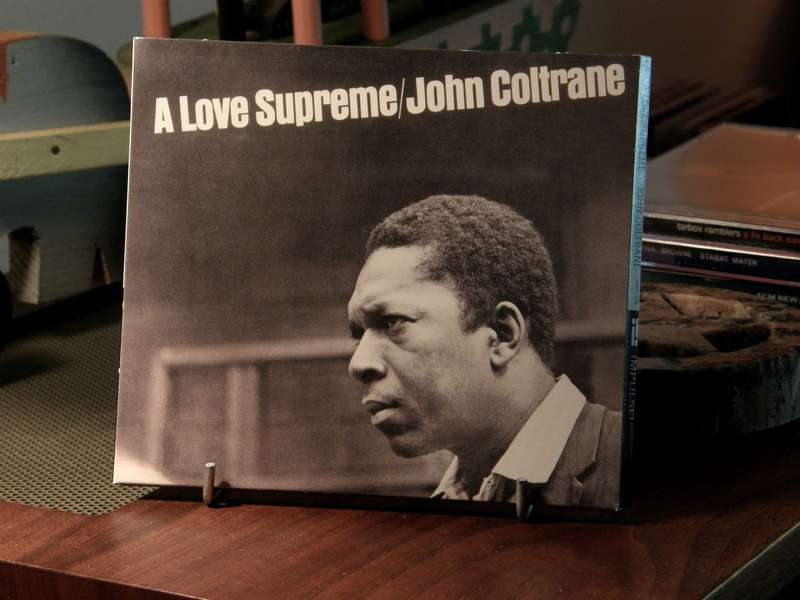
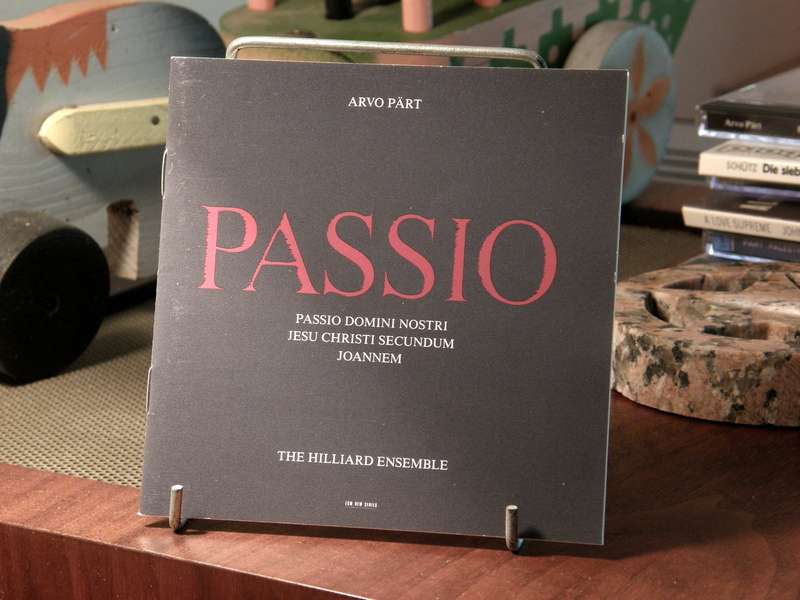
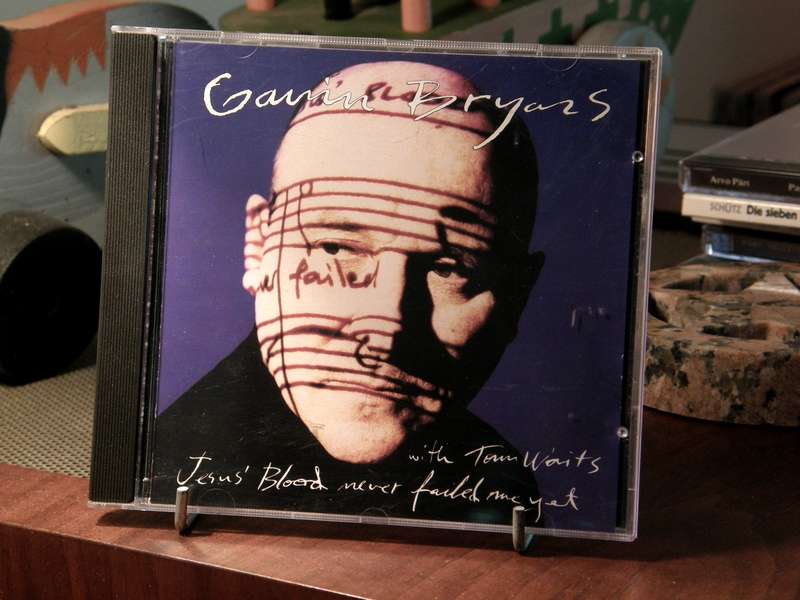
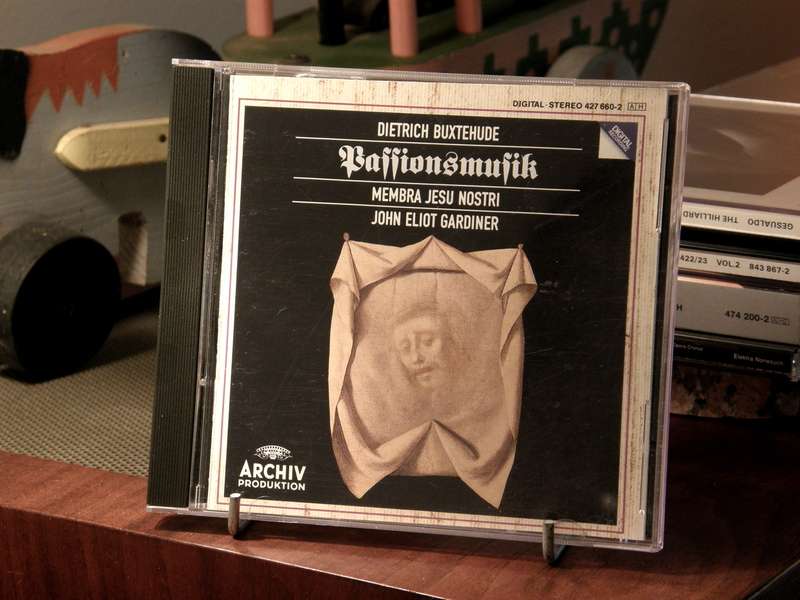
Music for Good Friday


A LOVE SUPREME
John Coltrane

Impulse


PASSIO
Passio Domini Nostri Jesu Christi Secundum Joannem
Arvo Pärt
The Hilliard Ensemble
Paul Hillier, cond.

ECM New Series


JESUS' BLOOD NEVER FAILED ME YET
Gavin Bryars

Point Music


ST. MATTHEW PASSION
Matthäuspassion, BWV 244
Johann Sebastian Bach
Gabrieli Players, Peter Harvey, Susan Bickley, Magdalena Kozena, Stephan Loges, Deborah York, Mark Padmore, Julia Gooding, James Gilchrist
Paul McCreesh, cond.

Deutsche Grammophon


TENEBRAE RESPONSORIA
Carlo Gesualdo
The Hilliard Ensemble

ECM New Series


PASSIONMUSIK
Dietrich Buxtehude: Membra Jesu Nostri
Heinrich Schütz: O Bone Jesu
The Monteverdi Choir
The English Baroque Soloists
Fretwork
John Eliot Gardiner

Archiv

Apr 5, 2009

An idea for retirement efforts.

As I begin pondering what post-bureaucracy early-retirement employment will mean, I had the idea to open a gourmet confectionery shop called...

DIE KUNST DER FUDGE.


Of course, you'd have to enter the shop through the bach door.

Mar 25, 2009

The Appliance of the Law.


I can't quite understand how it's possible for one person to think God is both smart enough to know which people among all the people on Earth keep the Sabbath and stupid enough not to realize this is cheating.

-- Andrew Smith, technology reporter, The Dallas Morning News


Mar 17, 2009

A seven-fold revelation.

Here are seven 10-minute (+/-) videos of a 12 mile loop through in-town Dallas on a Friday afternoon at the start of rush hour. Some of the streets used are part of the Dallas Bike Route system (including the bridges across the Trinity), and some are not, illustrating how important education for confident cycling is over the reliance upon fear-based special facilities, when it comes to bicycles being a truly useful part of the transportation mix.

The average rolling speed for this ride was about 15 mph, and the average trip speed was just under 10 mph.


Please pay attention to the lane position of the cyclist(s). By legally controlling the lane, motor vehicles do not attempt to pass them without first pulling out. The vehicles complete the pass at a safe distance, and then pull in when it's clear, making the so-called "safe-passing" law unnecessary.

You may wonder where the cars are on a Friday afternoon at the start of rush hour. Well, for the most part, the cars are ahead of them. When an intersection signal turns green, the cyclist(s) are at the back of the queue, and the motorized traffic simply pulls away, leaving the cyclist(s) in relatively empty road space. Overtaking motorists pass the cyclist(s) without incidence. The cyclist(s) catches up to the raer of the motorized traffic at the next intersection, and the cycle starts again.

Thanks to Brian DeSousa of Dual Chase Productions in Long Beach, California, Richard Wharton of the Cycling Center of Dallas, and to local vehicular cyclist Herman May (the guy with the panniers).

It really is this easy.

Note: No horns were honked, tempers lost, or fingers waved, in the making of this video.

Mar 12, 2009

I haven't always been penitent.


Not me, duh, but someone far braver and far, far better than I, in a Porsche 917 at Le Mans, 1971. 234 mph on the straight.

That's 90 mph faster than I've ever driven.

Mar 6, 2009

Feb 25, 2009

Houston Street Viaduct


The cyclists are traveling about 15 mph (not fast). Notice how the overtaking vehicles pull out to pass them well in advance of overtaking them. That’s because the cyclists are “controlling” their lane. Works that way all the time.

If the cyclists had been riding to the far right of the lane (as many people mistakenly believe they should), the motorists would have attempted to pass them without changing lanes, creating a dangerous situation.


This was videoed by Brian DeSousa of Dual-Chase Productions. The cyclists are Herman May and Richard Wharton.

Water and oxygen.


Water and oxygen are the two primary requirements for life. I can survive a long time without food (relatively), but only a few days without water. I can't last even a few minutes without oxygen.

If the oxygen trapped in my body was to spontaneously combust, and consume the water in my body, I'd be reduced to nothing more than a pile of ashes.

You too.

The late, self-proclaimed atheist, Carl Sagan, used to like to say that "We are made of star dust", referring to the organic elements of carbon-based nature being the results of stellar explosions (Dr. Sagan wasn't really an atheist... he worshiped the god "Chance", and its servant, "Science"). Dust to dust. Made from dust, and returned to dust. Ashes to ashes.

We are made of star ash.

Feb 17, 2009

"Plutoed"


The verb "to pluto" (preterite and past participle: "plutoed") is a neologism coined in the aftermath of the decision (to downgrade Pluto from planet designation to that of "large space rock").

In January 2007, the American Dialect Society chose "plutoed" as its 2006 Word of the Year, defining "to pluto" as "to demote or devalue someone or something", "as happened to the former planet Pluto when the General Assembly of the International Astronomical Union decided Pluto no longer met its definition of a planet."


--Wikipedia

Feb 14, 2009

The Bee Mine


There once was a man who set off in pursuit of gold. He wanted to be the richest man in the world. He was gone a long time.

On his search for wealth, he dug into the ground. He dug deep. Deeper. He dug deep, dark holes in search of the cold metal that would give him his fortune.

One day he returned. “Eureka!” he exclaimed to his friends and family. “I’ve found all the riches of the world! I’m the richest man alive!”

But his friends looked at him, and puzzled. He didn’t have any gold, but he was covered in sticky, golden honey, from his head to his feet.

“That’s not gold” his friends said to him, “that’s just sticky honey.” “Yes,” he exclaimed, “it’s honey from the rock!” For in his search, he came upon the greatest source of true wealth... sweet, sticky love that clings to and flavors everything. He found the honey mine.

Feb 12, 2009

Advancing to the rear.


“When the spirits are low, when the day appears dark, when work becomes monotonous, when hope hardly seems worth having, just mount a bicycle and go out for a spin down the road, without thought on anything but the ride you are taking.”

-- Sir Arthur Conan Doyle

Feb 6, 2009

Bennette Smith


Bennette Barbara Smith of Dallas, went to be with the Lord on February 1, 2009 at the age of 65. Bennette boldly fought illness and disease for the past several years and her courage continues to be an inspiration to her family. Bennette was a long time member and supporter of the arts and lived a life full of culture and travel. Her strong faith, gentle spirit and amazing wit will be remembered most by those who loved her. Services were held Friday, February 6, 2009 at 11:00 a.m. at Church of the Holy Cross in Dallas.

"A Mighty Fortress Is Our God" and "Saint Patrick's Breastplate" were sung with both conviction and moist eyes.

Feb 5, 2009

A David Prayer

Psalm 70

God! Please hurry to my rescue! God, come quickly to my side!
Those who are out to get me—
let them fall all over themselves.
Those who relish my downfall—
send them down a blind alley.
Give them a taste of their own medicine,
those gossips off clucking their tongues.

Let those on the hunt for you
sing and celebrate.
Let all who love your saving way
say over and over, "God is mighty!"

But I've lost it. I'm wasted.
God—quickly, quickly!
Quick to my side, quick to my rescue!
God, don't lose a minute.

- The Message

To the choirmaster. A Psalm of David, for the memorial offering.

Psalm 70

Be pleased, O God, to deliver me! O LORD, make haste to help me!
Let them be put to shame and confusion who seek my life!
Let them be turned back and brought to dishonor who desire my hurt!
Let them be appalled because of their shame who say, "Aha, Aha!"
May all who seek thee rejoice and be glad in thee!
May those who love thy salvation say evermore, "God is great!"
But I am poor and needy; hasten to me, O God!
Thou art my help and my deliverer; O LORD, do not tarry!


- The Revised Standard Version

Jan 12, 2009

The Blame Game


G.K. Chesterton once responded to a call for essays from the London Times on the topic, "What Is The Problem With The World."

Mr. Chesterton's complete essay read, "The Problem With the World is me."

Dec 28, 2008

Bye-bye Molly, the All-American Cat.


Almost seventeen years of the the best cat I have ever known came to an end today. Her body started shutting down a few days ago, and she finally breathed her last this afternoon.

Molly and her sister Sybil came to live with us from the SPCA after my daughters' fluffy orange tabby Freddie was struck by a car. Anna took to Sybil, and Catherine took to Molly, each naming their kitten for reasons of their own. Molly almost didn't make it, as she had an inability to digest food properly at first (weaned too early?), and went into "kitten decline", which the vet said is almost always fatal. But we pulled her through it.

After the girls had both gone off from home, Sybil contracted a fatal blood disease from hunting wild critters. That left us with Molly, and a strict "indoor only" policy. But a few years later, Molly developed a malignancy in her sinus passage. A biopsy showed it to be an especially aggressive cancer. The vet said she would only live six months at the most, and recommended putting her to sleep. We declined, but we prayed. Really hard. Really.

Molly lived another five good, playful, affectionate years. She often had breathing problems (cats are nose breathers only), but that came and went... just like her.

She was a great gift, and she made it through Christmas so everyone she loved could say good-bye, including our grand daughter June Anne (Catherine's little girl), who really loved Molly.

"Bye-bye, Molly."

Dec 24, 2008

Something to sink your teeth into.

From Think Christian...

Vampire-queen-turned-Christian-writer Anne Rice is answering reader questions about her faith and writing at Beliefnet this week, and many of her answers (and the questions) are quite interesting. One of the obvious questions to ask is how, from her current vantage point in the church, she looks back at the often lurid and grisly vampire novels that made her famous. Here’s her reply to a question along those lines:

I don’t write about the vampires and the witches anymore, not because I regret such work or feel guilty about it, far from it. I don’t write about them because I can’t be them anymore in fiction. I am some one else now. I live in a world where Salvation is a reality and the Light of Christ is a reality. So I can’t enter that old dark world in which my fallen heroes were metaphors for my own lost soul, and my soul grieving for a lost faith in God. I changed. So my work had to change.

A quick Google search turned up this essay at Anne Rice’s website in which she explains in more detail her attitude toward her vampire novels.

Dec 17, 2008

Today's Page Leaper.

The Psalm appointed for this morning.

Psalm 119:49-96 (New International Version)

z Zayin
49 Remember your word to your servant,
for you have given me hope.

50 My comfort in my suffering is this:
Your promise preserves my life.

51 The arrogant mock me without restraint,
but I do not turn from your law.

52 I remember your ancient laws, O LORD,
and I find comfort in them.

53 Indignation grips me because of the wicked,
who have forsaken your law.

54 Your decrees are the theme of my song
wherever I lodge.

55 In the night I remember your name, O LORD,
and I will keep your law.

56 This has been my practice:
I obey your precepts.

x Heth
57 You are my portion, O LORD;
I have promised to obey your words.

58 I have sought your face with all my heart;
be gracious to me according to your promise.

59 I have considered my ways
and have turned my steps to your statutes.

60 I will hasten and not delay
to obey your commands.

61 Though the wicked bind me with ropes,
I will not forget your law.

62 At midnight I rise to give you thanks
for your righteous laws.

63 I am a friend to all who fear you,
to all who follow your precepts.

64 The earth is filled with your love, O LORD;
teach me your decrees.

X Teth
65 Do good to your servant
according to your word, O LORD.

66 Teach me knowledge and good judgment,
for I believe in your commands.

67 Before I was afflicted I went astray,
but now I obey your word.

68 You are good, and what you do is good;
teach me your decrees.

69 Though the arrogant have smeared me with lies,
I keep your precepts with all my heart.

70 Their hearts are callous and unfeeling,
but I delight in your law.

71 It was good for me to be afflicted
so that I might learn your decrees.

72 The law from your mouth is more precious to me
than thousands of pieces of silver and gold.

y Yodh
73 Your hands made me and formed me;
give me understanding to learn your commands.

74 May those who fear you rejoice when they see me,
for I have put my hope in your word.

75 I know, O LORD, that your laws are righteous,
and in faithfulness you have afflicted me.

76 May your unfailing love be my comfort,
according to your promise to your servant.

77 Let your compassion come to me that I may live,
for your law is my delight.

78 May the arrogant be put to shame for wronging me without cause;
but I will meditate on your precepts.

79 May those who fear you turn to me,
those who understand your statutes.

80 May my heart be blameless toward your decrees,
that I may not be put to shame.

k Kaph
81 My soul faints with longing for your salvation,
but I have put my hope in your word.

82 My eyes fail, looking for your promise;
I say, "When will you comfort me?"

83 Though I am like a wineskin in the smoke,
I do not forget your decrees.

84 How long must your servant wait?
When will you punish my persecutors?

85 The arrogant dig pitfalls for me,
contrary to your law.

86 All your commands are trustworthy;
help me, for men persecute me without cause.

87 They almost wiped me from the earth,
but I have not forsaken your precepts.

88 Preserve my life according to your love,
and I will obey the statutes of your mouth.

l Lamedh
89 Your word, O LORD, is eternal;
it stands firm in the heavens.

90 Your faithfulness continues through all generations;
you established the earth, and it endures.

91 Your laws endure to this day,
for all things serve you.

92 If your law had not been my delight,
I would have perished in my affliction.

93 I will never forget your precepts,
for by them you have preserved my life.

94 Save me, for I am yours;
I have sought out your precepts.

95 The wicked are waiting to destroy me,
but I will ponder your statutes.

96 To all perfection I see a limit;
but your commands are boundless.

Dec 12, 2008

Oxymoron of the Day

From today's Wikipedia mainpage...

December 13: Republic Day in Malta (1974); Saint Lucy's Day

1545 – The Council of Trent, an ecumenical council convoked by Pope Paul III in response to the growth of Protestantism, opened in Trento, Italy.

Nov 25, 2008

We give thanks.

"Thanksgiving Day comes, by statute, once a year; to the honest person, it comes as frequently as the heart of gratitude will allow."

--Edward Sandford Martin

Nov 17, 2008

Younger stiff-necked Germans.


Sunday morning worship at the Lutheran Center at the University of Texas. Complete with wife, grandsons, daughter and son-in-law.


Nov 9, 2008

Out of the Memory Hole.

Every war when it comes, or before it comes, is represented not as a war but as an act of self-defense against a homicidal maniac.

If liberty means anything at all, it means the right to tell people what they do not want to hear.

In our age there is no such thing as ‘keeping out of politics.’ All issues are political issues, and politics itself is a mass of lies, evasions, folly, hatred and schizophrenia.

In times of universal deceit, telling the truth will be a revolutionary act.

One does not establish a dictatorship in order to safeguard a revolution; one makes a revolution in order to establish a dictatorship.

The nationalist not only does not disapprove of atrocities committed by his own side, he has a remarkable capacity for not even hearing about them.

The very concept of objective truth is fading out of the world. Lies will pass into history.

There are some ideas so wrong that only a very intelligent person could believe in them.

We of the sinking middle class may sink without further struggles into the working class where we belong, and probably when we get there it will not be so dreadful as we feared, for, after all, we have nothing to lose.

To survive it is often necessary to fight and to fight you have to dirty yourself.

--George Orwell

Nov 3, 2008